A dividend recap (dividend recapitalization) is when a private equity-owned company takes on new debt and uses the money to pay a dividend to its owners. The sponsor gets part of its investment back early, without selling the company. The trade-off is that the company carries more debt and a higher risk of default for the rest of the holding period.
Recaps are not rare edge cases. In February 2017 BJ's Wholesale Club, owned by Leonard Green and CVC, paid its owners a $735.5 million dividend funded by refinancing, part of about $1.8 billion distributed before its 2018 IPO, as reported. In 2019 Sycamore Partners had Staples refinance about $5.4 billion of debt and pay Sycamore a dividend of about $1 billion, two years after buying it. Some recaps end in a profitable exit. Others end in bankruptcy. The difference lies in the arithmetic and in when it is done.
How does a dividend recap work?
The mechanics are simple. A company that was bought with debt has been paying that debt down from cash flow for a few years. Its leverage has fallen. The owner asks lenders for a new, larger loan, uses part of it to refinance the old debt, and pays the rest out as a dividend.
A worked example in the research behind The Ownership Equation applies a recap to "Project Keystone," a hypothetical buyout. The sponsor invested $577.5 million of equity. By the end of year three, EBITDA has grown to $126.3 million and total debt has fallen from $550 million to $432.1 million, so leverage is 3.42 times EBITDA, down from 5.5 times at entry.
The sponsor decides to re-lever to 5.0 times:
| Step | Calculation | $m |
|---|---|---|
| Target total debt | 5.0 × 126.25 | 631.2 |
| Less: senior notes (unchanged) | (150.0) | |
| New term loan | 481.2 | |
| Less: existing term loan refinanced | (282.1) | |
| Incremental debt | 199.1 | |
| Less: fees (2%) | (4.0) | |
| Dividend to sponsor | 195.1 |
The sponsor receives $195.1 million in year three, which is 0.34 times its original equity. The new loan costs 7.75%, a quarter point more than the old one, because the company is now more levered.
Why does a dividend recap raise IRR but lower MOIC?
This is the core of the topic, and the numbers make it clear.
| No recap | With recap | |
|---|---|---|
| Exit enterprise value (year 5, 11x) | 1,619.3 | 1,619.3 |
| Debt at exit | (309.7) | (533.6) |
| Exit equity | 1,309.5 | 1,085.6 |
| Dividend in year 3 | n/a | 195.1 |
| Total cash to sponsor | 1,309.5 | 1,280.8 |
| MOIC | 2.27x | 2.22x |
| IRR | 17.8% | 18.7% |
The sponsor ends up with about $29 million less in total. That is the cost of the recap fees (about $4.0 million) and two years of extra interest on the larger loan (about $24.8 million after tax). In exchange, it receives $195 million two years earlier. Because IRR measures the speed of returns, not just their size, IRR rises by about 0.9 points. MOIC, which counts only total dollars, falls by 0.05x.
That trade is often worth it to the sponsor for a reason outside the deal: fundraising. Investors judge a fund by DPI, the cash it has actually distributed. A recap produces DPI years before an exit. The performance measurement study explains why LPs learned to prize distributions over paper returns after 2022, and Chapter 23 covers how a recap changes the track record a fund presents.
What happens to the company's credit?
The company is the one that carries the new debt.
| Credit measure | Year 4, no recap | Year 4, recap | Year 5, no recap | Year 5, recap |
|---|---|---|---|---|
| Debt / EBITDA | 2.76x | 4.31x | 2.10x | 3.63x |
| EBITDA / interest | 4.07x | 2.75x | 5.02x | 3.18x |
| Free cash flow | 56.2 | 44.1 | 66.2 | 53.5 |
Leverage is still below the 5.5 times the company carried at entry, and interest coverage stays above 2.75 times. In this case the recap is defensible. But the company has less cash to reinvest, less room to absorb a downturn, and a larger debt to refinance or hand to the next owner. A 1.5x increase in leverage typically triggers a negative ratings outlook or a one-notch downgrade, depending on the starting point.
When does a dividend recap make sense?
The research separates good recaps from bad ones.
A good recap happens when leverage has fallen well below what the business can comfortably carry, credit markets are open and spreads are tight, the exit timetable is uncertain and investors value distributions, and the cost of debt is below the equity's expected return.
A bad recap happens when the business is cyclical and near peak earnings, so a temporary high becomes permanent debt; when it pays out before the value creation plan is funded; or when it leaves no revolver headroom for a downturn.
Recap activity follows the credit market. In 2024 US dividend recap volume rebounded strongly, a multi-year high by some counts, as reported, because sponsors needed to return cash to LPs whose distributions had collapsed in 2022–23. The debt financing study tracks these cycles, and Chapter 8 explains how to stress-test a capital structure before adding to it.
Real dividend recap examples
| Company | Sponsor | Recap | What followed |
|---|---|---|---|
| Hertz | CD&R, Carlyle, Merrill Lynch | ~$1 billion special dividend, June 2006, six months after closing | IPO Nov 2006; sponsors reported ~2.5x+; Hertz filed Chapter 11 in 2020, after they had exited |
| Simmons Bedding | Thomas H. Lee Partners | Holding-company debt-funded dividends in 2004 and 2007 | Prepackaged Chapter 11, Nov 2009; THL reportedly made ~$77 million while bondholders lost ~$575 million |
| BJ's Wholesale Club | Leonard Green, CVC | Recaps in 2012, 2013 and $735.5 million in Feb 2017 | IPO June 2018; press reported ~5x total value |
| Staples | Sycamore Partners | ~$1 billion dividend in 2019 | Still held as of 2026; large 2024 refinancing |
| Prospect Medical Holdings | Leonard Green | ~$457 million dividend in 2018, funded by a ~$1.1–1.3 billion refinancing | 2019 sale-leaseback of hospital real estate; Chapter 11 in January 2025 |
The table shows both faces of the tool. BJ's had stable cash flow, and the research concludes the recaps were acceptable for that reason. Simmons became a symbol of misalignment: the sponsor made money while the company failed. The Hertz dividend, paid six months after Clayton, Dubilier & Rice and its partners closed the deal, drew criticism as "quick flip" behavior even though the later bankruptcy came long after the sponsors had left.
Is a dividend recap a fraudulent transfer?
It can be, if the timing is wrong. Under US law, a payment to shareholders made while a company is insolvent, or that leaves it with unreasonably small capital, can be challenged in a later bankruptcy. The Bankruptcy Code looks back two years, and state laws can reach further. That is why recaps usually come with a solvency analysis covering three tests: the balance sheet, cash flow and adequacy of capital. Recaps were part of the litigation in the Payless, Gymboree and Caesars bankruptcies, as the research notes. Directors appointed by the sponsor who approve a dividend to the sponsor also face a conflict that the board process has to manage.
What are the alternatives to a dividend recap?
| Tool | How it differs |
|---|---|
| Holding-company PIK-funded dividend | Debt sits above the operating company, with no cash interest at the operating level; more expensive |
| NAV loan at fund level | Borrows against a portfolio of companies, not one; LPs scrutinize it closely |
| Minority stake sale | Sells equity instead of adding debt and sets a valuation mark |
| Continuation vehicle | Lets LPs choose between cash and staying invested; see our continuation fund explainer |
| Preferred equity | Expensive junior capital, but no default risk at the company |
How does a dividend recap fit the four factors?
The Ownership Equation treats a buyout as four multiplying factors: price, financing, operations and realization. A recap is a deliberate trade between two of them. It realizes part of the value early, which reduces the risk that the exit never comes. It does so by weakening the financing factor. If the business keeps performing, the trade is cheap. If earnings fall, the extra debt can drive the financing factor to zero and take the equity, the employees and the creditors with it. Our worked LBO example shows the base deal before the recap, and our guide to how private equity makes money places recaps among the other exit routes.
The takeaway
A dividend recap borrows against a company's improved credit to pay its owners early: IRR and DPI rise, total dollars fall slightly, and the company carries more risk. It works when leverage has fallen well below safe capacity and earnings are stable, and it backfires when it turns peak earnings into permanent debt, as Simmons Bedding showed. The question to ask of any recap is whether the company could still survive a bad year with the new debt. Chapter 11 of The Ownership Equation discusses interim dividends alongside the other choices about when and how to realize value.
Frequently asked questions
Is a dividend recap legal?+
Yes, but it must pass legal tests. In the US, a dividend paid while a company is insolvent, or that leaves it with unreasonably small capital, can be challenged as a fraudulent transfer if the company later fails; the Bankruptcy Code looks back two years and state laws can reach further. Corporate-law rules such as Delaware's surplus test also apply.
Why do private equity firms do dividend recaps?+
To return cash to fund investors before selling the company. A recap raises IRR and DPI, which help with fundraising, especially when exits are slow, as they were in 2022 to 2024.
Does a dividend recap reduce the private equity firm's total profit?+
Usually slightly. Fees and the extra interest on the new debt reduce total dollars returned, so MOIC dips, but the cash arrives years earlier, so IRR rises. In the worked example, MOIC falls from 2.27x to 2.22x while IRR rises from 17.8% to 18.7%.
What is the difference between a dividend recap and a leveraged recapitalization?+
A dividend recap is a portfolio company borrowing to pay its existing owners. A leveraged recapitalization is a broader term for a large debt-funded payout or share repurchase, sometimes used by public companies that keep a small listed stub of shares, as in THL's 1998 Fisher Scientific deal.
Go deeper in The Ownership Equation
Chapters
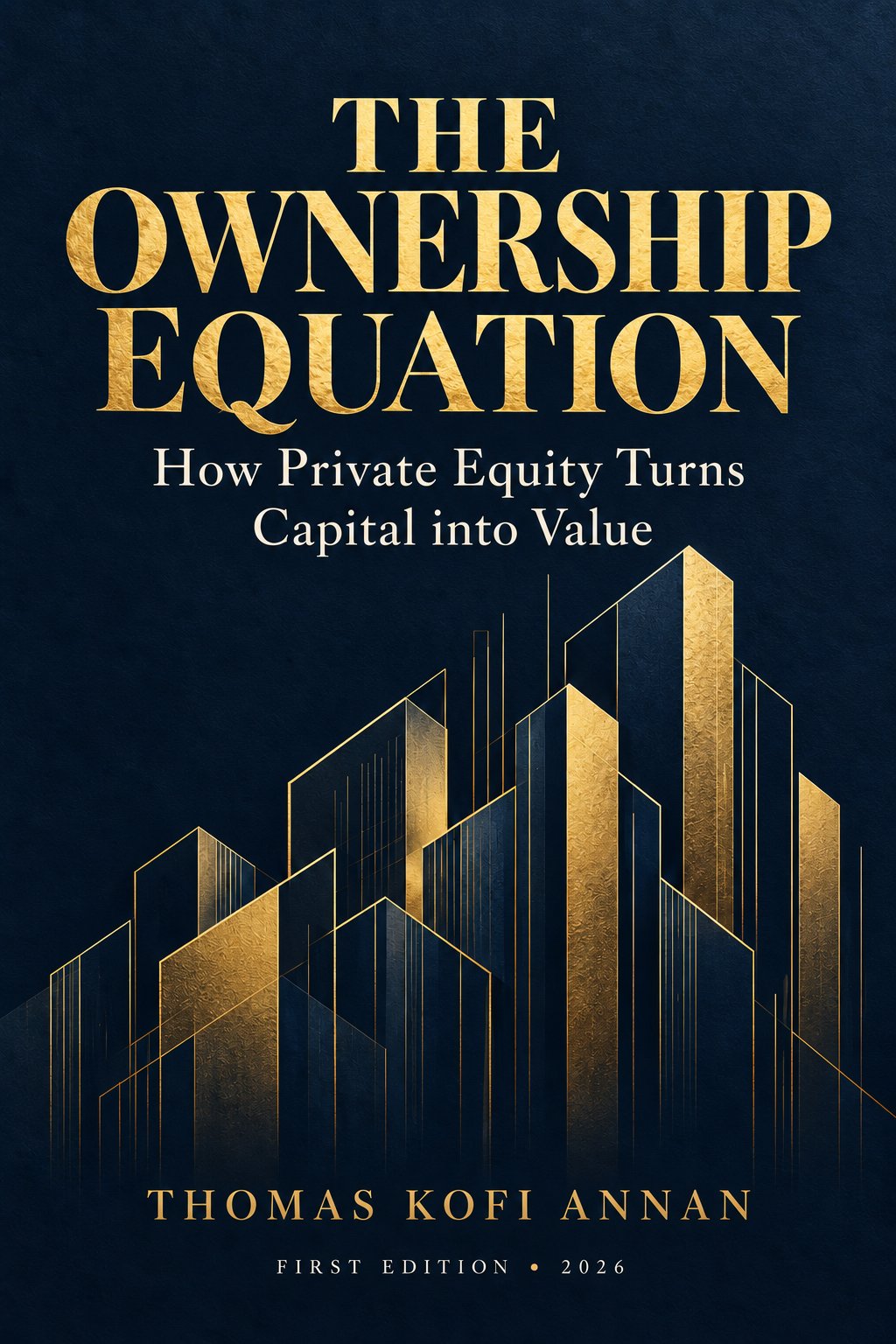
From the research behind The Ownership Equation
How Private Equity Turns Capital into Value
25 chapters, 22 industry studies, 92 firms and 924 strategic moves.
See the bookEducational content, not investment, legal, tax, medical or engineering advice. Figures marked “reported” come from filings and published sources that have not been independently audited.