A continuation fund (or continuation vehicle, CV) is a new fund set up by a private equity firm to buy one or more companies from one of its own older funds. Investors in the old fund can take cash for their share or roll it into the new vehicle, and fresh secondary investors supply the money for those who sell. The structure lets a firm keep owning its best companies after the original fund's life runs out.
The landmark case is Action, the Dutch discount retailer. By 2020 3i Group had owned it for nine years, partly through a 2006 fund well past its intended term. 3i moved Action into a single-asset continuation vehicle backed by about £1.9 billion of third-party capital, as reported, and raised its own stake from about 45.9% to about 52.7%. LPs who rolled have done very well, as Action's value multiplied several times through 2026. The deal also showed the tension at the heart of every CV: COVID-19 had just closed stores in several countries, and the firm setting the price was on both sides of the trade.
How does a continuation fund work?
A typical GP-led continuation vehicle follows six steps, as the secondaries and continuation vehicles study describes:
- The GP picks the asset, usually a strong company that still has room to grow but sits in a fund nearing the end of its term.
- A secondary adviser runs a process to find a lead investor, who sets the price and terms. Syndicate investors fill the rest of the equity.
- The price is usually close to net asset value (NAV), around 95% to 100% for high-quality single assets, often supported by a fairness opinion from an independent bank or valuation firm.
- Existing LPs elect to sell at the CV price, roll into the CV, or occasionally take a status-quo option on unchanged terms.
- Economics reset. The new vehicle typically charges a management fee of about 0.5% to 1.0% on invested capital and tiered carry, for example 10% above 1.5x to 2.0x and 15% to 20% above 2.5x to 3.0x. The GP is expected to roll much of the carry it earns from the old fund and often commits new money.
- Optional new capital can be raised for add-on acquisitions and growth.
A single-asset CV typically takes four to six months from decision to closing.
Single-asset vs multi-asset continuation vehicles
| Single-asset CV | Multi-asset CV | LP portfolio sale (for comparison) | |
|---|---|---|---|
| Typical price (% of NAV) | ~95–100% | ~90–100% | ~85–95% for buyout funds |
| Buyer's target return | ~18–25% gross IRR | ~15–20% gross IRR | ~12–16% net IRR |
| Target multiple | ~2.0x+ | ~1.7–2.0x | ~1.4–1.7x |
| Main risk | Concentration in one company | Weaker assets bundled with strong ones | Stale NAV, unfunded commitments |
Multi-asset deals bundle several companies. In July 2021, for example, Kohlberg & Company moved selected companies from its seventh fund into a continuation vehicle co-led by affiliates of BlackRock, GIC and Lexington Partners, a transaction reported at about $1.1 billion.
Why do private equity firms use continuation funds?
To keep compounding winners. A fund's life is about 10 years plus extensions. A great company does not become a worse investment because its fund is old. Selling it to another buyer hands the next stage of growth to someone else.
To provide liquidity when exits are slow. From 2022 to 2025, IPOs and sales slowed sharply and distributions became the metric LPs cared about most. Bain & Company's 2025 report estimated about 29,000 unsold buyout companies worth about $3.6 trillion, as reported. Continuation vehicles became a standard exit route rather than an exception. The exit strategies study traces that shift.
To fund more growth. A CV can raise fresh capital for add-ons that an old fund can no longer provide.
Why are continuation funds controversial?
Because the GP is on both sides. In a CV, the GP:
- advises the selling fund, and owes its investors the best price;
- manages the buying vehicle, which earns new fees and carry, so a lower price helps it;
- often crystallizes carry in the old fund at the CV price, so a higher price helps it there.
Its incentives pull in opposite directions, and it knows far more about the company than anyone else. The governance process exists to replace "trust the GP" with three things: market price discovery, independent validation and investor choice. Chapter 19 of The Ownership Equation puts it plainly: the economic analysis and the governance analysis must be done together.
How are continuation funds regulated?
Mostly by market practice. In May 2023 ILPA, the LP trade body, published guidance on continuation funds. That year the SEC also adopted Private Fund Adviser rules that would have required a fairness or valuation opinion for adviser-led secondaries. The Fifth Circuit vacated those rules in June 2024. As of 2026, the opinion is market standard rather than a legal requirement in the US, and almost all large CVs still obtain one.
The practical checklist that has emerged:
| Area | What good practice looks like |
|---|---|
| Price discovery | A competitive process run by an independent adviser with credible bidders; the price is set by the lead investor, not by the GP |
| Validation | A fairness opinion from a firm independent of the deal adviser, on a fixed fee |
| LP advisory committee | Gets the same information as the lead investor; conflicted members recuse themselves |
| Election | At least 20 business days for LPs to decide, under ILPA guidance |
| Disclosure | Any third-party approaches for the asset in the prior 12–24 months are disclosed |
| Alignment | The GP rolls most of its crystallized carry and adds new money |
Should an LP sell or roll?
The research's answer is that rolling is a new investment decision and should be treated like one. The relevant comparison is the cash on offer today, not the gain since the original purchase. A rolling LP should ask for the same information the lead investor received and answer one question: would I back a buyout of this company, at this price, with this sponsor, today?
Several signals help. If the GP is rolling close to 100% of its crystallized carry and adding fresh money, it believes in the asset. If it is cashing out carry while asking LPs to roll, that is a warning. A second continuation of the same asset deserves a much higher bar, because it can mean the market will not pay the GP's mark. And a single-asset CV carries the concentration risk of a direct deal at the speed of a secondary trade.
Who invests in continuation funds?
Large dedicated secondary buyers lead most deals. They include Ardian, Lexington Partners (whose Lexington Capital Partners X closed at about $22.7 billion in 2024, as reported), Blackstone Strategic Partners (Strategic Partners IX closed at about $22.2 billion in 2023), AlpInvest, Goldman Sachs Vintage, HarbourVest, Pantheon and Coller Capital. Advisers such as Jefferies, Evercore, PJT Park Hill, Lazard, Campbell Lutyens and Houlihan Lokey run the processes.
The growth of evergreen wealth vehicles has added demand. Their appetite for seasoned, quickly deployable assets has pushed up pricing on high-quality buyout portfolios.
How does a continuation fund fit the four factors?
The Ownership Equation treats an investment as four factors that multiply: price, financing, operations and realization. A continuation fund is a tool for the realization factor. It turns part of an investment into cash without a sale to an outsider. But it also resets the price factor, because the rolling LP and the new buyer are effectively buying the company again at today's value. A strong business does not guarantee a good new entry price. Chapter 25 uses Action to make exactly that point: retaining an asset must still be judged at its present opportunity cost.
Other tools serve the same need in different ways. A dividend recap returns cash by adding debt at the company. A NAV loan borrows against a fund's whole portfolio. A CV sells equity instead. Our guide to how private equity makes money compares all the exit routes.
The takeaway
A continuation fund lets a private equity firm keep a strong company past its fund's term by selling it to a new vehicle it also manages, while offering existing investors the choice of cash or continued exposure. The structure solves a real problem, the mismatch between a great asset and a fund that must end, but the GP's position on both sides means price discovery, an independent opinion and the GP's own reinvestment are what make it fair. For an LP, the decision to roll is a new purchase and deserves a new underwriting. Chapter 19 of The Ownership Equation covers secondaries and continuation vehicles in full.
Frequently asked questions
How is a continuation fund different from a normal secondary sale?+
In an LP-led secondary, an investor sells its stake in a fund to another investor, and the GP is not the driving party. In a continuation fund, the GP itself starts the deal and moves one or more companies from an old fund into a new vehicle it will keep managing.
What options do existing investors have in a continuation fund deal?+
They can usually sell their share for cash at the agreed price or roll their interest into the new vehicle. Some deals also offer a status-quo option that rolls on the original fund's economics without new fees or carry.
Are continuation funds good for investors?+
They can be. Selling LPs get liquidity, and rolling LPs keep exposure to a strong asset. The risk is that the GP sits on both sides of the trade, so investors should look for a competitive price-setting process, an independent fairness opinion and a GP that rolls most of its carry.
How big is the continuation fund market?+
Total secondary volume was about $160 billion in 2024 (Jefferies reported about $162 billion) and above $200 billion in 2025 by advisor estimates. GP-led deals, dominated by continuation vehicles, made up roughly 40% to 50% of that.
Go deeper in The Ownership Equation
Chapters
Industry studies
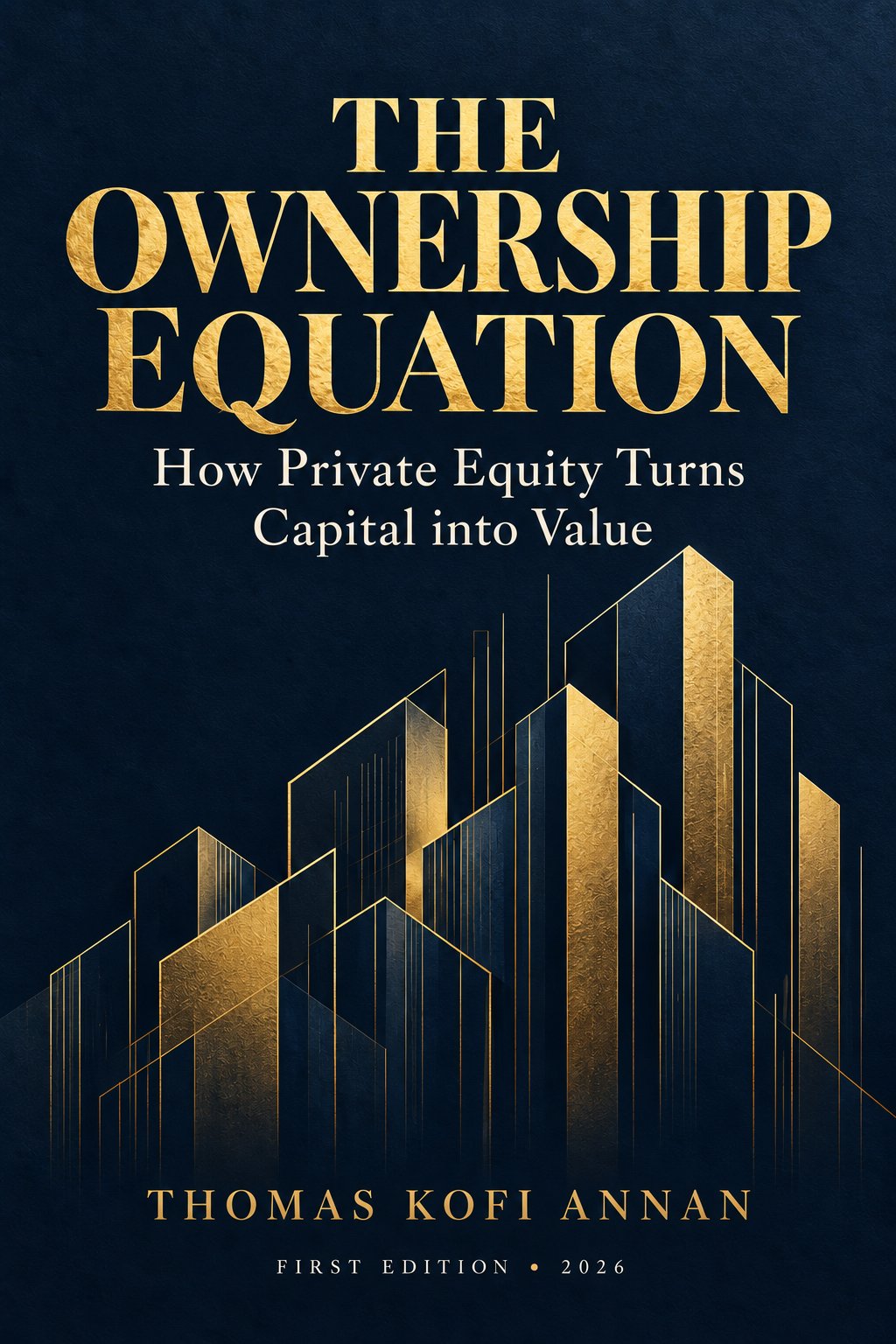
From the research behind The Ownership Equation
How Private Equity Turns Capital into Value
25 chapters, 22 industry studies, 92 firms and 924 strategic moves.
See the bookEducational content, not investment, legal, tax, medical or engineering advice. Figures marked “reported” come from filings and published sources that have not been independently audited.